
If you’ve come across the word natomanaga, you’re not alone. Many people search this term after hearing local stories, seeing photos online, or learning about Madagascar’s wildlife. At first glance, it sounds mysterious. Some think it’s a legend. Others believe it’s a dangerous snake.
The truth is more grounded, and also more interesting.
This guide explains what natomanaga really is, where it lives, how it behaves, and why it’s often misunderstood. Everything is explained in simple words, with facts clearly separated from myths.
What Is Natomanaga?
Natomanaga is a local name used in Madagascar to describe a real snake species. It is not a monster, spirit, or fictional creature.
In most cases, the name refers to the Malagasy Giant Hognose Snake, a species found only in Madagascar.
So yes, natomanaga is a real animal, but the confusion comes from language and folklore. Different regions use different names, and over time, stories added fear and mystery to the word.
That’s why some people think natomanaga is extremely dangerous, while others see it as just another wild snake.
Scientific Classification of Natomanaga
To understand natomanaga clearly, it helps to look at its scientific identity.
| Classification Level | Details |
|---|---|
| Common Name | Natomanaga / Nato Snake |
| Scientific Name | Leioheterodon madagascariensis |
| Family | Colubridae |
| Type | Rear-fanged snake |
| Endemic Region | Madagascar |
This classification confirms that natomanaga belongs to the colubrid family, which includes many non-lethal snakes around the world.
Origin and Meaning of the Name “Natomanaga”
The name natomanaga comes from Malagasy language roots.
- “Nato” is commonly used for certain snakes and, in some regions, even for strong red wood
- “Managa” or “menarana” relates to movement or snake-like behavior
Because Madagascar has many dialects, the same animal may have multiple local names. One village might call it nato, another natomanaga, and another menarana.
This variation is the main reason for confusion. Stories travel faster than biology, and names change as they move from place to place.
Physical Appearance and Identification
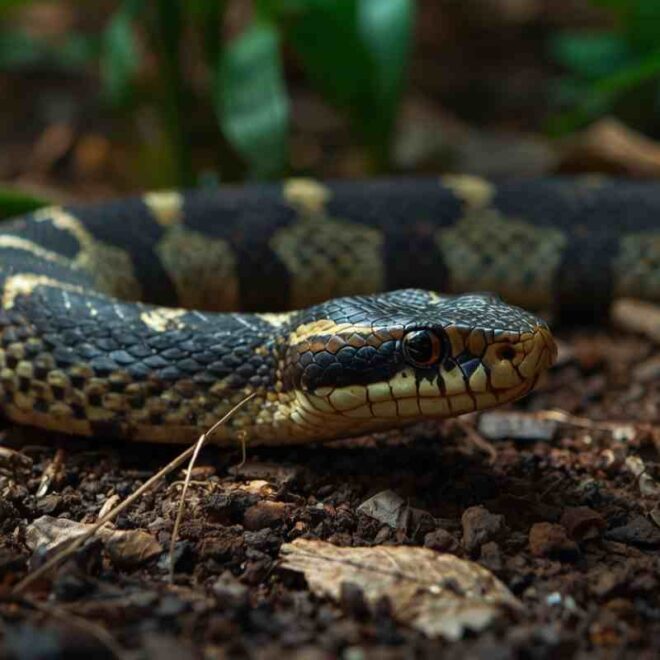
Natomanaga is a large, thick-bodied snake with features that make it easy to recognize once you know what to look for.
It has a strong body, smooth scales, and a confident posture when moving on the ground.
The most unique feature is its upturned nose, shaped almost like a small shovel. This helps it dig through soil and leaf litter.
Color patterns vary, but most individuals show dark blotches or checkered patterns over a lighter background. These patterns help with camouflage and intimidation.
How to identify a natomanaga in the wild
- Length between 1.2 to 1.8 meters
- Thick, muscular body
- Upturned “hog-like” nose
- Dark and light contrast patterns
- Found mostly on the ground during daytime
How Big Does a Natomanaga Get?
Natomanaga is considered a large snake, especially among colubrids.
Most adults reach 4 to 6 feet in length. Some females grow slightly larger and heavier than males.
Compared to other snakes:
- Smaller than large pythons
- Much shorter than king cobras
- Bigger and heavier than corn snakes
Its size is one reason people feel intimidated when they encounter it unexpectedly.
Habitat and Distribution in Madagascar
Natomanaga is found only in Madagascar, including nearby islands such as Nosy Be.
It lives in a wide range of environments:
- Humid rainforests
- Dry deciduous forests
- Open grasslands
- Farmland edges and rural fields
This snake adapts well to different climates, from wet coastal areas to drier inland regions.
Text-based map explanation:
Eastern Madagascar offers dense forests, central regions provide grasslands, and western areas include drier zones. Natomanaga can survive across all these zones, which explains its wide distribution.
Daily Behavior and Activity Patterns
Natomanaga is diurnal, meaning it is active during the day.
You may see it basking in sunlight along paths, roads, or forest edges. It uses warmth to regulate body temperature and stay alert.
When threatened, its behavior becomes dramatic. It flattens its neck, raises its head, and hisses loudly.
This is not aggression. It’s a defensive bluff.
The snake mimics a cobra to scare predators, even though cobras do not exist in Madagascar.
Diet and Feeding Habits
Natomanaga feeds on a variety of small animals.
Its diet includes:
- Frogs and toads
- Lizards
- Small mammals
- Bird eggs
It hunts by actively searching rather than waiting in ambush.
One fascinating trait is its resistance to toad toxins. This allows it to eat prey that other predators avoid.
By controlling rodent and amphibian populations, natomanaga plays an important role in natural pest control.
Is Natomanaga Venomous or Dangerous?
The short answer is no, it is not dangerous to humans.
Natomanaga is rear-fanged and produces mild venom. The venom helps subdue small prey, not large animals.
To deliver venom, the snake would need to chew, which rarely happens with humans.
Possible bite symptoms:
- Mild swelling
- Local pain
- Temporary irritation
There are no known fatal cases linked to this species. The actual risk to humans is very low.
What To Do If You Encounter a Natomanaga
If you see a natomanaga in the wild, stay calm.
Safety steps:
- Keep your distance
- Do not try to touch or kill it
- Give it space to move away
What not to do:
- Do not provoke it
- Do not attempt to pick it up
- Do not block its escape route
Locals and tourists should treat it with respect, just like any wild animal.
Natomanaga in Malagasy Folklore and Beliefs
In Malagasy culture, snakes are often linked to omens and taboos, known as fady.
Some communities believe seeing a nato snake brings bad luck. Others believe killing it is forbidden.
Many myths exaggerate its danger, confusing it with imaginary snakes that jump or attack humans.
In reality, natomanaga avoids conflict whenever possible.
Role of Natomanaga in the Ecosystem
Natomanaga is both a predator and prey.
As a predator, it controls populations of frogs, rodents, and pests.
As prey, it supports birds of prey and larger animals.
Removing it would disrupt the balance of Madagascar’s ecosystems. Every species plays a role, and this snake is no exception.
Conservation Status and Threat
Natomanaga is currently listed as Least Concern by conservation authorities.
That said, it still faces threats:
- Deforestation
- Road accidents
- Fear-driven killing
- Illegal wildlife trade
While adaptable, long-term habitat loss could change its status.
Natomanaga as a Pet (What People Should Know)
Some reptile enthusiasts keep this snake in captivity.
Important points to know:
- Legal rules vary by country
- Captive-bred snakes are preferred
- Wild-caught trade harms ecosystems
Basic care requires proper humidity, space, and experience. This is not a beginner pet.
Common Myths About Natomanaga (Debunked)
Myth: It jumps at people
Fact: It does not jump or chase humans
Myth: Its venom is deadly
Fact: Venom is mild and not life-threatening
Myth: It is aggressive by nature
Fact: It relies on bluffing and avoidance
FAQs
Is natomanaga a real snake?
Yes, natomanaga is a real snake species found only in Madagascar. Scientifically, it is known as Leioheterodon madagascariensis and is commonly called the Malagasy Giant Hognose Snake in wildlife studies.
Is natomanaga dangerous to humans?
No, natomanaga is not considered dangerous to humans. Although it has mild venom, it is rear-fanged and the venom is not strong enough to cause serious harm to people.
Why does natomanaga spread its neck?
Natomanaga spreads its neck as a defensive display to scare predators. This behavior makes it look larger and more threatening, similar to a cobra, even though cobras do not exist in Madagascar.
Can natomanaga kill a human?
There are no known cases of a natomanaga killing a human. Its venom is mild and mainly used to subdue small prey, not to defend against large animals like humans.
Where can natomanaga be found?
Natomanaga is endemic to Madagascar and can be found across different regions of the island. It lives in forests, grasslands, and even near agricultural or rural areas where food is available.
Does natomanaga really play dead?
Yes, natomanaga is known for playing dead when it feels threatened. It may flip onto its back, stay motionless, and release a foul smell to convince predators it is not worth attacking.
Is natomanaga protected by law?
Legal protection for natomanaga can vary, but wildlife laws in Madagascar generally discourage harming native species. Conservation efforts focus on reducing fear and preventing unnecessary killing.
Why do locals fear natomanaga?
Many locals fear natomanaga because of long-standing cultural beliefs and myths. Over time, folklore has portrayed snakes as dangerous or bad omens, even when the animal itself is not aggressive.
What should tourists do if they see one?
Tourists should stay calm and keep a safe distance if they encounter a natomanaga. Observing it quietly and allowing it to move away on its own is the safest and most respectful approach.