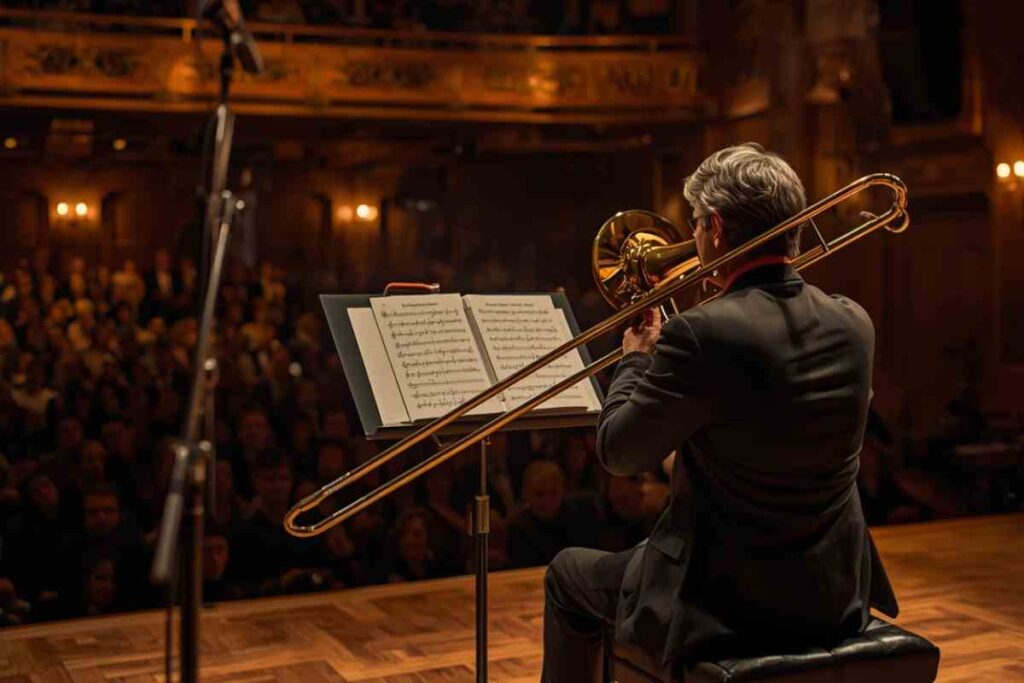

The Jeff Manookian Trombone Sonata is more than just another addition to the brass repertoire. It is a late-career work written with clarity, emotion, and confidence. Completed in 2020, only a year before the composer’s passing, it reflects a lifetime of musical experience distilled into thirteen focused minutes.
For trombonists, this piece offers both challenge and reward. It blends tradition with modern color, giving performers a chance to show technique, tone, and expressive depth.
This guide is written for students, recital performers, competition candidates, and educators who want a deeper understanding of the work, not just what it is, but how to approach it musically and technically.
Quick Facts About the Jeff Manookian Trombone Sonata
Below is a practical reference table designed for performers and teachers.
| Category | Details |
|---|---|
| Full Title | Sonata for Trombone and Piano |
| Common Name | Jeff Manookian Trombone Sonata |
| Composer | Jeff Manookian (1953–2021) |
| Year Composed | 2020 |
| Publisher | Windsor Editions |
| Instrumentation | Tenor Trombone & Piano |
| Duration | Approx. 13 minutes |
| Movements | Allegro – Adagio – Vivace |
| Formal Structure | Fast–Slow–Fast |
| Style | Contemporary Neo-Romantic |
| Tonality | Tonal with chromatic color |
| Difficulty Level | Advanced (Upper Undergraduate / Graduate) |
| Approximate Range | E2 to B♭4 (varies by edition/interpretation) |
| Technical Demands | Endurance, lyrical phrasing, rhythmic precision |
| Premiere Information | Written late in composer’s life (specific premiere details limited publicly) |
| Score Availability | Windsor Editions; also available via IMSLP (Creative Commons) |
| Suitable For | Recitals, competitions, juries |
Who Was Jeff Manookian?
Jeff Manookian was an American composer and conductor born in 1953. Over his career, he wrote orchestral, chamber, vocal, and solo instrumental works. He developed a personal voice that balanced tonal foundations with rich chromatic harmony.
He often described his music as freely chromatic yet grounded in tonality. That phrase explains a lot. His writing does not abandon melody. It stretches harmony while keeping the listener oriented.
The Jeff Manookian Trombone Sonata represents his late style. It feels confident, focused, and emotionally direct. There is no sense of experimentation for its own sake. Instead, it reflects maturity and clarity.
Historical Context of the Trombone Sonata
The sonata was written in 2020, during the final chapter of Manookian’s life. This gives the work special weight. It feels reflective, but not sentimental.
There is limited public documentation about a specific commission or dedication. However, its craftsmanship suggests it was written with serious performers in mind.
Within American brass repertoire, the piece adds a modern tonal voice. It stands alongside other contemporary works but avoids extreme avant-garde language. That makes it both relevant and accessible.
Overall Structure of the Sonata
The work follows the traditional fast–slow–fast layout. This classical structure gives performers and audiences something familiar.
But within that structure, Manookian introduces modern harmonic color and expressive shifts.
The piano is not a background instrument. It shares themes, drives rhythm, and shapes the emotional flow. This partnership makes the sonata feel like true chamber music rather than a solo with accompaniment.
Movement-by-Movement Analysis
I. Allegro – Structure, Themes, and Technical Demands
The opening movement begins with energy and forward motion. It likely follows a loose sonata-allegro structure, featuring contrasting themes and active development.
Rhythm plays a key role. The exchanges between trombone and piano feel conversational. At times, they challenge each other. At other moments, they move together in tight coordination.
Dynamic contrast adds shape. Strong accents are balanced by softer lyrical phrases.
Performance Considerations
Breath planning is essential. Long phrases require controlled support.
Articulation must stay clear, especially in faster passages. Slide precision becomes critical when navigating chromatic lines.
Balance with the piano is another challenge. The pianist often carries dense harmonies, so projection and tone focus matter.
What to Listen For
Listen for thematic contrast between bold and lyrical material.
Notice how small motives evolve. Energy builds and releases naturally.
II. Adagio – Emotional Core of the Work
The second movement slows everything down. Here, melody takes center stage.
The writing feels vocal. Long sustained lines require warmth and patience. Romantic influence is clear, but the harmony includes subtle chromatic shifts.
The piano supports with resonance and depth rather than overpowering texture.
Performance Challenges
Tone quality must remain steady across sustained notes.
Legato playing needs smooth slide control.
Intonation becomes especially important in chromatic passages. Vibrato choices should feel natural, not exaggerated.
Interpretive Suggestions
Think like a singer. Shape each phrase with intention.
Avoid rushing. Let the harmony unfold slowly.
Emotional pacing is key. The movement should feel reflective, not heavy.
III. Vivace – Virtuosity and Momentum
The final movement brings energy back. It feels lively and driven.
Rhythmic patterns create excitement. The character can feel playful at times, but there is also intensity.
Structurally, it may resemble a rondo or scherzo-like design, with recurring ideas returning between contrasting sections.
Technical Demands
Speed increases the challenge.
Articulation must stay clean at fast tempos. Stamina becomes a factor after the previous two movements.
The piano reinforces momentum, so tight ensemble coordination is necessary.
Ending Impact
The finale provides closure. It completes the emotional arc from strength to introspection and back to vitality.
The ending feels confident rather than dramatic. It leaves a strong impression without excess.
Technical Difficulty Breakdown
The Jeff Manookian Trombone Sonata sits at an advanced level.
The range typically extends from the lower register around E2 up to approximately B♭4. The tessitura often stays in the middle to upper-middle register, requiring endurance.
Endurance is tested across all three movements. The first and third demand rhythmic precision, while the second tests sustained tone control.
The piano part is not simple. It requires an experienced collaborative pianist comfortable with thick harmonies and rhythmic interplay.
Ensemble coordination can be challenging due to chromatic shifts and tempo contrasts.
How It Compares to Other Trombone Sonatas
Manookian vs Hindemith
Hindemith’s sonata is harmonically tense and structurally strict.
Manookian’s writing feels warmer and more openly melodic. The tonal clarity makes it emotionally accessible.
Where Hindemith leans toward sharp edges, Manookian leans toward lyrical color.
Compared to Contemporary Works
Some modern trombone works explore extended techniques and extreme dissonance.
The Jeff Manookian Trombone Sonata stays more melodic. It avoids experimental effects and focuses on expressive phrasing.
This makes it audience-friendly while still artistically serious.
Is the Jeff Manookian Trombone Sonata Good for Recitals?
For upper-level undergraduates, it is challenging but achievable.
For graduate students, it works very well as a recital piece. It shows tone, technique, musicality, and endurance.
In competitions, it offers contrast across movements and demonstrates versatility.
For juries, individual movements may also be effective selections.
Programming ideas include pairing it with a Baroque transcription or a contrasting modern piece for stylistic balance.
Why This Sonata Expands Modern Trombone Repertoire
The trombone solo repertoire is smaller compared to violin or piano literature.
This sonata adds an American voice rooted in tonality but shaped by modern harmony.
It respects classical structure while offering expressive range.
Most importantly, it provides meaningful musical content without relying on novelty. That balance makes it valuable for long-term repertoire growth.
Where to Find the Score and Recordings
The score is published by Windsor Editions.
It is also available through IMSLP under a Creative Commons license, increasing accessibility for students and educators.
At the time of writing, commercial recordings are limited. As more performers adopt the piece, this may change.
Always check licensing details when using IMSLP materials for performance.
Frequently Asked Questions
When was the Jeff Manookian Trombone Sonata written?
It was completed in 2020, near the end of the composer’s life.
How difficult is the Jeff Manookian Trombone Sonata?
It is considered advanced. It suits upper-level undergraduate and graduate trombonists.
What is the duration of the sonata?
The total length is approximately thirteen minutes.
Is the Jeff Manookian Trombone Sonata tonal or atonal?
It is tonal with chromatic color. The harmony stretches but does not abandon tonal grounding.
Is this sonata suitable for undergraduate recitals?
Yes, especially for strong upper-level students who have solid technical control and endurance.
Where can I find the score?
The score is available from Windsor Editions and can also be accessed via IMSLP under a Creative Commons license.