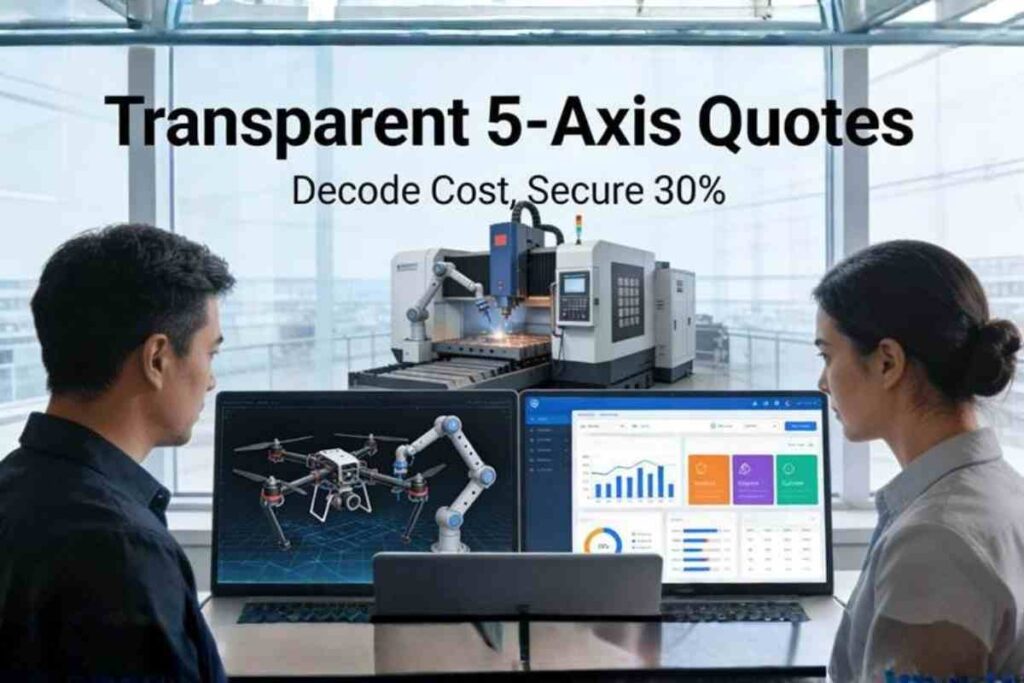

Introduction
In the relentless pursuit of peak performance within modern industrial manufacturing, securing an accurate quote for geometrically complex components often feels like navigating a pricing black box. Project leaders are routinely plagued by hidden costs and unanticipated delivery delays, which directly jeopardize R&D budgets and time-to-market goals. This ambiguity transforms sourcing from a strategic function into a high-stakes gamble, undermining financial planning and project viability.
The root of this opacity lies in the limitations of conventional 3-axis machining struggling with modern precision demands, coupled with the high entry barriers and non-transparent pricing models of advanced 5-axis technology. This dilemma forces businesses into a difficult trade-off between budgetary control and part quality. However, a paradigm shift is underway. By understanding the underlying pricing logic of digital procurement, companies can leverage a transparent quoting process to dramatically enhance manufacturing efficiency and reduce costly trial-and-error. This article provides a structured framework for sourcing high-standard 5-axis machining services, ensuring every investment is converted into reliable part performance.
Why is Precision Engineering Shifting Toward 5-Axis Solutions in 2026?
The global industrial landscape is undergoing a profound transformation, driven by the demands for lighter, stronger, and more integrated components in sectors like aerospace, medical devices, and robotics. This evolution makes complex geometries with organic shapes, deep cavities, and critical compound angles the new norm, designs that stretch traditional 3-axis machining beyond its practical and economic limits. The shift toward 5-axis solutions is not merely a technological upgrade but a strategic response to these market-driven demands for unprecedented design freedom and integrated part consolidation.
1. The Demand for Integrated, High-Performance Components
Modern products are increasingly designed as single, multifunctional units to enhance reliability, reduce weight, and minimize assembly points. Components like turbine blades, orthopedic implants, and drone frames require seamless, continuous surfaces that are impossible to machine accurately in multiple setups. 5-axis CNC technology enables the production of these monolithic structures in a single clamping, which is critical for maintaining the structural integrity and aerodynamic or hydrodynamic efficiency that define high-performance applications.
2. Quantifying the Business Value of Consolidation and Precision
Beyond geometric capability, the business value of 5-axis machining is quantifiable. Reducing multiple setups to one eliminates the cumulative errors inherent in repositioning a part, directly enhancing geometric dimensioning and tolerancing (GD&T) adherence. This translates to fewer quality failures and less scrap. Furthermore, consolidating several traditionally assembled parts into one 5-axis machined component slashes assembly time, inventory, and potential points of failure, offering substantial lifecycle cost savings that justify the initial manufacturing investment.
3. The Macro-Trend Towards Agile and Digital Manufacturing
This shift aligns with broader industrial trends toward smart factories and Industry 4.0. As noted in research on the future of manufacturing, the next era of growth is characterized by greater connectivity, data utilization, and supply chain agility. 5-axis CNC machines, as sophisticated data-rich nodes within a networked system, are fundamental to this transition. They enable faster prototyping, more flexible small-batch production, and better integration with digital twin simulations, allowing companies to respond swiftly to market changes and innovation cycles.
What Factors Determine a Transparent 5-Axis CNC Machining Service Quote?
Moving beyond the opaque “lump-sum” quote requires understanding the core cost drivers that constitute a detailed price. A truly transparent CNC pricing model dissects the total cost into its fundamental elements: raw material utilization, programming and machine time, tooling, finishing, and quality assurance. This breakdown is not just about itemization; it transforms the quote from a simple price tag into a collaborative project blueprint that aligns engineering intent with financial reality, fostering long-term partnership trust.
l Material Costs and Machinability: The selection of material forms the baseline of any quote. A transparent 5-axis CNC machining service quote will clearly differentiate between the cost of the raw billet and the material yield after machining. More critically, it accounts for machinability. Advanced alloys like titanium or Inconel demand significantly slower feed rates, specialized tooling, and cause higher tool wear, which can increase machining costs by 200-300% compared to aluminum. A clear quote models these parameters, not just applies a vague multiplier.
l Geometrical Complexity and Programming: Complexity is the primary differentiator between 3-axis and 5-axis work. A part with deep pockets, undercuts, and free-form surfaces requires sophisticated CAM programming to generate efficient, collision-free toolpaths. A transparent provider will explain the strategy — whether using 3+2 positional or continuous 5-axis milling — and how it impacts time. As detailed in a comprehensive guide to transparent pricing, the most significant cost reductions occur at the design stage through Design for Manufacturability (DFM) feedback, where suggestions on adjusting non-critical radii or splitting a deep cavity can dramatically reduce cycle time and cost.
l Quality Standards and Inspection Protocols: The required level of precision and verification is a major cost factor. A component requiring ±0.05mm general tolerances is fundamentally different from one with ±0.01mm on critical features. The latter demands more meticulous machining, potentially specialized equipment, and rigorous inspection using Coordinate Measuring Machines (CMMs). A transparent quote specifies the inspection method, the sampling plan (first-article vs. full lot), and how compliance with standards like ISO 9001 or AS9100D is ensured and documented, directly linking quality costs to value.
How Do Top 5 Axis CNC Machining Services Manufacturers Ensure Reliability?
For mission-critical components, reliability is non-negotiable. Leading 5-axis CNC machining services manufacturers build this reliability not on individual craftsmanship alone, but on a bedrock of systematized quality management. Adherence to internationally recognized standards like ISO 9001 and IATF 16949 provides a framework for consistent processes, traceability, and continuous improvement, systematically mitigating the risks inherent in manufacturing complex parts. This system transforms potential variability into predictable, high-quality outcomes.
1. The Framework of International Quality Standards
Standards like ISO 9001:2015 define the requirements for a robust Quality Management System (QMS). As outlined by the International Organization for Standardization, this involves establishing, maintaining, and continually improving a system that ensures an organization can consistently provide products that meet customer and regulatory requirements. For a manufacturer, this means every process — from order review and raw material sourcing to final inspection and shipping — is documented, controlled, and regularly audited. This systemic approach is the first defense against errors and inconsistencies.
2. Process Control and Advanced Metrology
Certification provides the framework, but precision execution relies on controlled processes. This involves using calibrated, state-of-the-art equipment and implementing in-process verification. For instance, on-machine probing allows for real-time measurement and tool compensation during machining, creating a closed-loop control system that maintains tolerances. Post-process, high-accuracy CMMs provide definitive validation against the original CAD model, generating comprehensive inspection reports that serve as the final quality record for full traceability, a cornerstone of standards like AS9100D for aerospace.
3. Building a Culture of Preventative Quality
Beyond the machinery and paperwork, elite manufacturers foster a culture where quality is preventative, not detective. This involves rigorous supplier qualification, comprehensive staff training, and proactive risk management practices embedded in project planning. By investing in advanced simulation software to validate toolpaths and prevent collisions before metal is cut, they address potential failures at the digital stage. This culture ensures that service reliability is a default outcome, providing clients with the confidence that their complex, high-value projects will be delivered as specified, on time.
Why is Smart Sourcing Critical for Reducing Manufacturing Lead Times?
In a fast-paced market, time-to-market is a critical competitive lever. Smart Sourcing — the strategic selection of manufacturing partners based on capability, process integration, and communication efficiency — is pivotal in compressing production lead times. It moves beyond simply finding a vendor to building a partnership with a supplier whose operational model is designed for speed and agility. This approach directly tackles the hidden time costs of multiple handoffs, requotes, and quality disputes that plague traditional, transactional procurement.
1. The Efficiency of Integrated Digital Workflows: Smart sourcing prioritizes partners with digital integration at their core. An advanced online quoting engine that can instantly analyze a 3D model, perform automated DFM checks, and generate a detailed cost breakdown within hours — not days — dramatically accelerates the pre-production phase. This seamless digital handoff from design to manufacturing planning eliminates the back-and-forth communication loops that traditionally consume weeks, setting the stage for a faster overall project timeline.
2. Consolidation and One-Stop-Shop Capabilities: Lead time is heavily impacted by logistics and coordination. Sourcing a part that requires machining from one supplier, anodizing from another, and laser etching from a third introduces coordination delays, multiple shipping legs, and quality finger-pointing. A smart sourcing strategy identifies partners with vertically integrated or well-managed secondary services. A manufacturer that can handle precision machining, finishing, and quality inspection under one roof inherently controls the schedule more effectively, reducing total throughput time and simplifying project management.
3. Proactive Communication and Project Management: Reducing lead time isn’t just about machine speed; it’s about information velocity. Reliable manufacturers employ proactive project management principles, providing regular updates, flagging potential delays early, and maintaining clear lines of communication. This transparency allows the client to plan accordingly and fosters a collaborative environment where issues are solved together quickly. This proactive stance prevents small problems from snowballing into major schedule disruptions, ensuring predictable delivery even for complex custom 5-axis machining projects.
How to Effectively Navigate the CNC Machining Quote Guide for First-Time Buyers?
For engineers and buyers new to procuring complex 5-axis parts, the quoting process can be daunting. Navigating it effectively requires preparation and understanding what information a manufacturer needs to provide an accurate, comparable, and valuable quote. A clear CNC machining quote guide empowers first-time buyers to move from a position of uncertainty to one of informed collaboration. The goal is to provide the manufacturer with everything required to assess the project accurately on the first submission, avoiding time-consuming clarification cycles.
1. Providing Complete and Unambiguous Design Data
The foundation of a good quote is perfect information. This means supplying a fully defined 3D CAD model (STEP or IGES format is preferred) accompanied by a complete 2D technical drawing. The drawing must clearly call out all critical dimensions, geometric tolerances (flatness, perpendicularity, true position), surface finish requirements (Ra values), and material specifications. Ambiguity in drawings is a primary source of quote inaccuracy and later disputes. Clearly indicating which tolerances are critical versus reference-only can also significantly impact cost.
2. Defining Post-Processing and Quality Requirements
Machining is often only one step. Be explicit about all secondary operations: Does the part require heat treatment (e.g., stress relieving)? What specific surface finish is needed (e.g., anodizing Type II, color, thickness; powder coating; passivation)? Furthermore, define the quality validation expectations. Is First Article Inspection (FAI) with a full report required? What level of in-process inspection is needed? Specifying these details upfront ensures they are factored into the initial quote, preventing “surprise” add-on charges later.
3. Articulating Project Context and Volume
Context empowers the manufacturer to offer the most efficient solution. Communicate the part’s end-use application (e.g., aerospace structural component, medical implant prototype), as this influences material certifications and quality standards. Clearly state the required quantity — prototype (1-10 pieces), low-volume production, or high-volume — as this drastically changes the optimal manufacturing approach and cost structure. Finally, be clear about the target budget range and required timeline; this allows a responsive manufacturer to suggest potential DFM optimizations that can meet your goals.
What Are the Long-term Benefits of Choosing a Precision 5-Axis Partner?
Selecting a precision 5-axis machining services provider should be viewed as a strategic, long-term investment, not a transactional purchase. The right partnership yields compounding benefits that extend far beyond the cost of individual parts. It fosters a collaborative environment where design for manufacturability (DFM) is continuously optimized, product quality becomes more consistent, and overall supply chain resilience is strengthened. This synergy reduces total cost of ownership and accelerates innovation cycles.
1. Continuous DFM Optimization and Cost Avoidance
With each project, a strategic partner deepens its understanding of your design language, performance requirements, and quality expectations. This institutional knowledge allows them to provide increasingly sophisticated DFM feedback proactively. They can anticipate challenges, suggest alternative materials or features that enhance performance or reduce cost, and apply lessons learned from past projects to new ones. This ongoing collaboration prevents recurring errors and systematically drives down costs over the long term, as both parties move further up the learning curve together.
2. Enhanced Product Quality and Reduced Operational Risk
Long-term collaboration builds a shared commitment to quality. The manufacturer becomes intimately familiar with your critical-to-quality (CTQ) dimensions and inspection standards. This leads to fewer non-conformance reports (NCRs), reduced scrap, and minimal production delays. The reliability of the supply chain increases, reducing the operational risk associated with part failures or delayed deliveries. The peace of mind that comes from a trusted, high-performance precision CNC machining services partner is invaluable, especially in regulated industries.
3. Accelerated Development and Competitive Advantage
A seamless partnership accelerates the entire product development lifecycle. Trust and established communication channels mean faster quote turnaround, quicker design iteration cycles, and more reliable production schedules. This agility allows your company to bring products to market faster, respond more quickly to design changes, and outpace competitors who are bogged down by supplier management issues. The long-term strategic value lies in this enhanced competitive agility, enabling you to innovate with confidence knowing your manufacturing partner is a reliable and capable extension of your own team.
Conclusion
In the competitive landscape of precision manufacturing, transparent pricing and excellence in craftsmanship are not mutually exclusive. By developing a deep understanding of the cost structure behind 5-axis machining and choosing a partner whose processes are safeguarded by international certifications like IATF 16949 or AS9100D, businesses can ensure their most innovative designs are translated into reality with maximum efficiency and reliability. The journey from a opaque quote to a transparent partnership is the definitive step towards mastering complex component sourcing in 2026 and beyond.
FAQs
Q1: How can I get a more competitive price on a 5-axis machining quote?
A: Optimizing your part’s design for manufacturability (DFM) is key. Simplifying geometries, relaxing non-critical tolerances, and selecting readily available materials can significantly reduce machining time and cost. Providing complete 3D and 2D drawings helps manufacturers provide the most accurate assessment. Choosing a certified, technically proficient partner often leads to more optimized, cost-effective processes.
Q2: What is the investment value of 5-axis CNC compared to traditional 3-axis machining?
A: The core value lies in single-setup machining of complex parts, which eliminates cumulative errors from multiple fixturings. This dramatically improves geometric accuracy and positional tolerances. While the initial cost per hour may be higher, the ability to consolidate parts and reduce secondary operations often leads to lower total cost, faster delivery, and superior part integrity, offering strong long-term ROI.
Q3: What qualifications should I prioritize when selecting a 5-axis CNC machining services manufacturer?
A: Prioritize quality certifications like ISO 9001 as a baseline, with industry-specific standards like IATF 16949 (automotive) or AS9100D (aerospace) being strong indicators of rigorous process control. Equally important is proven experience with complex geometries similar to your part. Evaluate their technical communication, DFM feedback quality, and the transparency of their quoting process.
Q4: Why do some 5-axis machining quotes include a high setup or programming fee?
A: These fees cover the significant pre-production engineering required: creating complex CAM toolpaths, designing and manufacturing custom fixtures, performing first-article inspections, and proving out the process. For low-volume production, this one-time cost is amortized over fewer parts. Transparent suppliers will detail these fees, and costs can be optimized through design adjustments or larger production runs.
Q5: How long does it typically take to get a detailed 5-axis CNC quote?
A: With modern digital quoting systems, leading manufacturers can provide a detailed, DFM-included quote within 24-48 hours for most parts upon receiving complete design files. This speed is facilitated by automated analysis software. Providing clear requirements for critical features, materials, and quality needs helps engineers deliver the most accurate and speedy quote possible.
Author Bio
The author is a seasoned precision engineering consultant with extensive experience in the field of advanced manufacturing. He specializes in assisting R&D and engineering teams across the medical, aerospace, and robotics sectors in navigating the various challenges associated with sourcing complex, high-tolerance components. His company, LS Manufacturing, is dedicated to helping innovators overcome critical manufacturing hurdles. As a professional team certified under both IATF 16949 and AS9100D standards, they are committed to delivering high-standard 5-axis machining solutions. To learn more about how to optimize component designs for both cost-effectiveness and manufacturability, please contact them to request a free DFM (Design for Manufacturability) checklist.