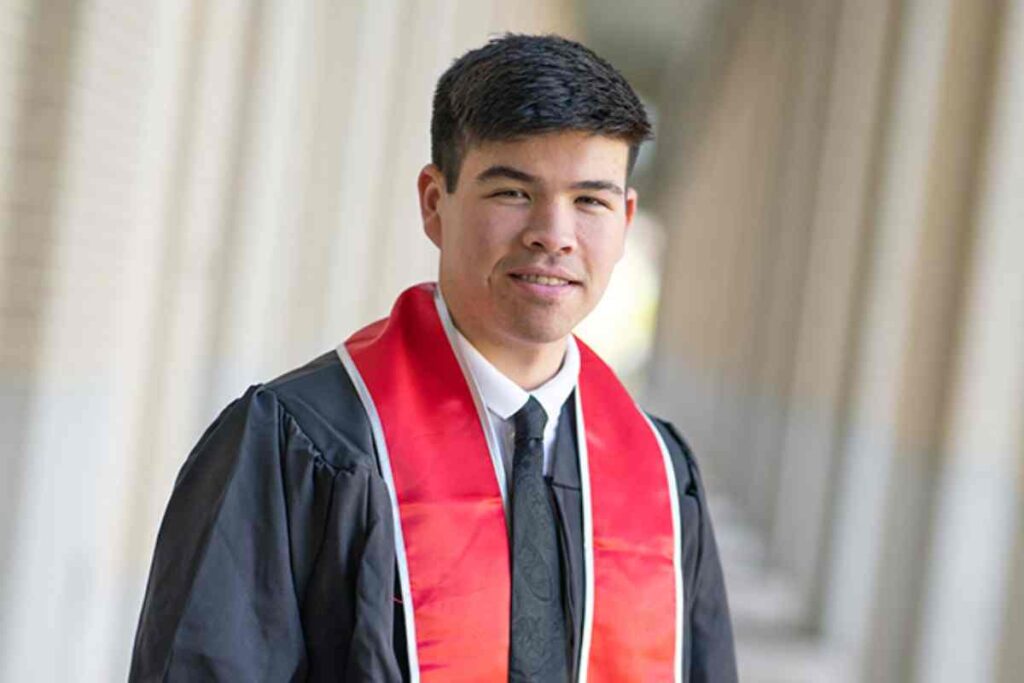

Autonomous drones are transforming the way we respond to disasters, especially wildfires. One researcher making remarkable strides in this field is Tyler Harp CMU, a robotics engineer whose work focuses on enabling drones to operate safely in hazardous environments. By combining cutting-edge algorithms, sensor fusion, and real-world testing,
Harp is pushing the boundaries of what unmanned aerial vehicles (UAVs) can achieve. His research not only improves drone performance but also has the potential to save lives during wildfire events.
Academic Background and Journey at Carnegie Mellon University
Tyler Harp’s journey in robotics began at Carnegie Mellon University (CMU), one of the world’s top institutions for autonomous systems research. He earned his Bachelor of Science in Mechanical Engineering with a minor in Robotics, building a strong foundation in control systems, mechanical design, and basic robotics.
This interdisciplinary approach gave him a solid understanding of both the hardware and software aspects of autonomous machines.
After his undergraduate degree, Harp continued at CMU for a Master of Science in Robotics (MSR) within the School of Computer Science. This program is globally recognized for preparing engineers to solve complex problems in autonomy and AI.
His graduate work took place in the AirLab (Autonomous Systems Lab), a specialized research group within CMU’s Robotics Institute that focuses on aerial and ground robots capable of operating in challenging conditions.
Under the guidance of Professor Sebastian Scherer, Harp deepened his expertise in mapping, localization, and UAV perception, working on projects that integrate real-world field testing with theoretical algorithm development.
Key Research Focus
Harp’s work revolves around making drones smarter, safer, and more adaptable in environments where human access is limited or dangerous. His main research areas include:
- 3D Mapping and SLAM: Using Simultaneous Localization and Mapping (SLAM), Harp helps drones understand their surroundings and navigate safely even in smoke-filled or visually degraded areas. For non-technical readers, this is essentially teaching a drone to “see” and create a map while moving through complex environments.
- UAV Perception and Sensor Fusion: He combines multiple sensors—cameras, LiDAR, thermal imagers—to provide a complete picture of the surroundings. This multi-sensor approach improves reliability when conditions, like smoke or darkness, would otherwise hinder navigation.
- Autonomous Navigation in Hazardous Environments: From dense forests to wildfire zones, drones face unpredictable obstacles. Harp develops algorithms that allow UAVs to plan safe paths and react to sudden hazards without human intervention.
- Stereo-Thermal Imaging Applications: By pairing thermal cameras with stereo vision, his research enables drones to detect objects and terrain features that would be invisible to standard cameras, particularly during night operations or in smoke-filled air.
FIReStereo Dataset and UAV Innovation
One of Harp’s most notable contributions is the FIReStereo dataset, which he co-developed to enhance UAV perception in challenging environments. Traditional datasets focus on clear, structured conditions, but FIReStereo provides real-world data for drones operating in wildfire or disaster scenarios.
The dataset includes over 200,000 synchronized stereo-thermal image pairs, combined with LiDAR ground-truth measurements for accurate depth perception. It covers multiple conditions day, night, rain, smoke and diverse environments, including urban areas and dense forests.
Here’s a quick overview of FIReStereo’s key features:
| Feature | Description | Application |
|---|---|---|
| Stereo-Thermal Pairs | 200,000 synchronized images | Navigation in smoke/fog |
| LiDAR Ground Truth | Accurate depth measurements | Training perception algorithms |
| Environments | Urban, forest | Disaster and wildfire UAV missions |
| Conditions | Day, night, rain, smoke | Real-world resilience testing |
Harp’s role included data collection, system design, and algorithm evaluation, ensuring the dataset’s utility for advancing UAV autonomy. FIReStereo has become a valuable resource for researchers and developers working on drones that can operate reliably under extreme conditions.
Master’s Thesis: Multi-Wire Detection for UAV Safety
Drones often encounter one subtle yet dangerous obstacle: powerlines and wires. Detecting these thin, low-contrast objects is critical for safety, especially in low-altitude flights during disaster response.
Harp addressed this challenge in his master’s thesis, “Vision-Based Multi-Wire Detection and Tracking for UAV Wire Approach”, by developing a real-time algorithm that allows drones to detect and track multiple wires simultaneously. Using a combination of classical image processing and geometric reasoning, his system provides drones with reliable awareness of overhead obstacles.
The implications are significant:
- Infrastructure Inspection: Drones can safely monitor powerlines and bridges.
- Disaster Response: UAVs avoid hazards while navigating hazardous zones.
- Autonomy Advancement: Algorithms increase confidence in drone navigation without human intervention.
By focusing on computational efficiency, the algorithm can run onboard drones, enabling safer low-altitude operations.
Wildfire and Disaster Robotics Applications
Tyler Harp CMU’s work has direct real-world applications, particularly in wildfire monitoring and disaster response. Wildfires create environments with heavy smoke, unpredictable terrain, and weak GPS signals, making autonomous navigation extremely difficult.
His research integrates stereo-thermal imaging with SLAM and advanced localization, allowing drones to map and navigate complex landscapes in real time. For example:
- UAVs can fly through smoke-filled forests while maintaining precise location awareness.
- Thermal imaging allows drones to detect hotspots even at night or under dense smoke.
- Real-time mapping assists firefighters in monitoring fire spread without putting humans at risk.
These innovations demonstrate how advanced UAV systems can make disaster response faster, safer, and more effective.
Career Milestones and Industry Experience
Tyler Harp CMU has combined academic achievement with hands-on experience in robotics. Here’s a quick look at his career highlights:
| Year | Milestone | Details |
|---|---|---|
| 2021 | Undergraduate Degree | B.S. in Mechanical Engineering, CMU |
| 2023 | MSR Enrollment | School of Computer Science, CMU |
| 2025 | FIReStereo Dataset | Co-author, IEEE publication |
| 2025 | FAA License | Part 107 Drone Pilot |
| 2025 | Thesis | “Vision-Based Multi-Wire Detection and Tracking” |
| 2025 | Internship | Robotics Software Engineering, Symbotic |
In addition to academic research, his internship at Symbotic provided practical experience with autonomy software in industrial settings. Working in AirLab also allowed Harp to collaborate closely with peers and mentors, strengthening both technical skills and teamwork abilities.
Personal Interests and Leadership Skills
Beyond robotics, Harp is an athlete and team player. He has competed in soccer throughout school and college and enjoys skiing. These experiences have helped him develop discipline, strategic thinking, and collaboration skills, which translate seamlessly into his research. Working in high-pressure lab environments and coordinating on complex UAV projects often mirrors the dynamics of competitive sports.
Future Applications and Impact
The impact of Tyler Harp CMU’s work extends far beyond academic recognition. His research opens doors for:
- Wildfire Monitoring: Drones can detect fire spread faster and provide real-time situational awareness.
- Disaster Response: Autonomous UAVs can enter dangerous zones, delivering aid or assessing damage.
- Infrastructure Inspection: Powerlines, bridges, and industrial structures can be monitored safely and efficiently.
By improving UAV autonomy, perception, and safety, Harp’s work contributes to more resilient and intelligent aerial systems that can perform reliably in unpredictable conditions.
FAQs About Tyler Harp CMU
Who is Tyler Harp?
Tyler Harp is a robotics researcher and engineer at Carnegie Mellon University, specializing in autonomous drones and UAV safety systems. His work focuses on developing algorithms and datasets that allow drones to navigate hazardous environments like wildfire zones.
What is his current research focus?
Harp’s research emphasizes autonomous navigation, 3D mapping, SLAM, stereo-thermal imaging, and sensor fusion to improve UAV perception in challenging conditions.
What is FIReStereo, and why is it important?
FIReStereo is a large-scale stereo-thermal imaging dataset created to train drones for safe navigation in smoke, rain, and low-visibility conditions. It provides researchers with real-world scenarios that traditional datasets do not cover.
How does Tyler Harp’s work impact wildfire safety?
His algorithms and datasets enable drones to safely fly through smoke-filled forests, detect hotspots, and map terrain, helping firefighters make informed decisions while reducing human risk.
Where did he study and work?
Harp studied at Carnegie Mellon University for both his undergraduate and master’s degrees and conducted research at the AirLab (Autonomous Systems Lab). He also gained practical experience during an internship at Symbotic.
What makes his UAV algorithms unique?
Harp’s algorithms integrate multi-sensor data with real-time decision-making, allowing drones to detect obstacles, map complex environments, and navigate autonomously even in degraded visual or GPS-denied conditions.
How can students follow his work at CMU?
Students can explore CMU’s Robotics Institute website, check publications from AirLab, and review FIReStereo dataset contributions to understand Harp’s research projects and methodologies.
Conclusion
Tyler Harp CMU represents the next generation of robotics innovators. His research blends technical precision, real-world application, and collaborative expertise, pushing autonomous drones to safely navigate hazardous environments.
From wildfire monitoring to infrastructure inspection, Harp’s contributions show how applied robotics can make a tangible difference. By combining advanced perception systems, practical testing, and interdisciplinary skills, Tyler Harp is shaping the future of UAV safety and autonomous aerial systems.