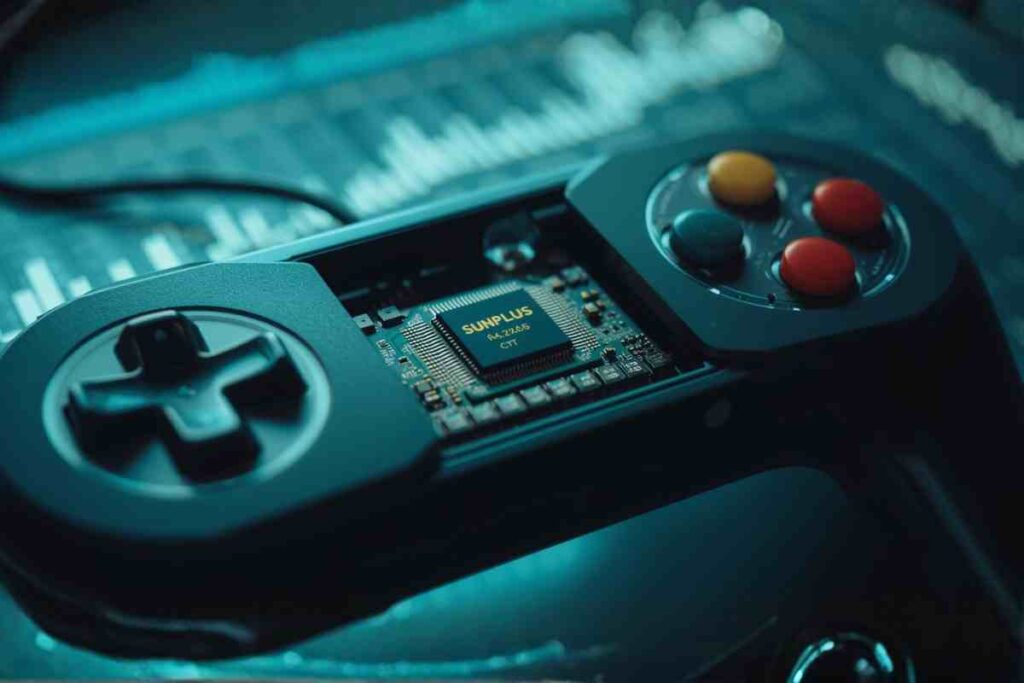

The phrase Jakks Pacific Sound Extractor Sunplus describes the process used to pull audio data from the plug-and-play TV game systems built with Sunplus chips. These devices packed full games inside a small controller, and the sound files lived inside the same flash memory as the game code. Extracting those sounds requires an understanding of the chip family, the compression style, and the workflow used by preservation enthusiasts.
The era of Sunplus-powered plug-and-play consoles
When Jakks Pacific launched its plug-and-play systems in the early 2000s, the company needed a compact and affordable chip that could run games, decode audio, and drive simple graphics in a single unit. Sunplus filled that role with its SPG line. These chips handled the CPU functions, basic video, and the entire sound pipeline without requiring extra hardware. The tight integration made the devices inexpensive to manufacture and surprisingly capable for their size.
The Sunplus audio design used ADPCM-based compression to store voice clips, background loops, and effect samples in small footprints. This compression style is similar to older game consoles, but the Sunplus flavor has its own characteristics. As a result, pulling audio from these devices involves understanding how the chip structures sound blocks and how those blocks are stored inside the firmware.
This era of hardware creates the foundation for today’s extraction and decoding workflows. Anyone working with these systems begins with the SPG family because nearly all Jakks Pacific titles rely on it.
The internal layout of Sunplus game firmware
Inside a typical Sunplus-based plug-and-play game, every part of the experience lives in a single ROM image. That image usually contains the executable code, graphics, font data, maps, sound banks, and sometimes duplicates used for fallback routines. Audio sits in its own region, often next to or embedded within larger data blocks.
Sound files in these ROMs are rarely labeled in a readable way. They appear as compressed byte sequences that follow a Sunplus ADPCM pattern. When viewed in a hex editor, these sequences often repeat in a predictable rhythm. This is one of the visual cues preservationists use to identify sound data.
The memory layout also includes a range of small markers used by the engine to call sound effects during gameplay. These markers are not standardized across all SPG chips, so analysts rely on pattern recognition and prior dumps to understand the structure. This layout knowledge makes it easier to extract audio cleanly without pulling corrupted or partial data.
The workflow used to pull audio from Sunplus firmware
Extracting sound from these devices follows a sequence that hobbyists have refined over time. The process begins by dumping the ROM from the physical unit. People use devices such as flash programmers or logic analyzers to copy the chip contents into a bin file. Once the ROM is saved, the work shifts to software.
The ROM is inspected in a hex editor to locate potential audio regions. Analysts search for repeating ADPCM signatures or size blocks that match sound banks used in similar Jakks Pacific releases. Once a sound bank is identified, the relevant data is copied into a separate file for decoding.
Tools such as vgmstream or custom Python scripts can convert the proprietary compression into standard WAV files. These tools do not support every Sunplus variation, so minor trial and error is normal. The decoded audio often includes raw voice clips, short loops, background tracks, and ambient effects. The final result depends on how the original game stored and structured its sounds.
This workflow reflects how preservation groups operate today. It is a mix of hardware dumping, hex analysis, speculation, and established pattern knowledge. Because each ROM is slightly different, experience plays a major role in successful extraction.
The audio behavior of Sunplus hardware during gameplay
Once the sounds are identified, it becomes easier to understand how the SPG chips handle audio during runtime. These chips rely heavily on compressed samples rather than synthesizing sound in real time. The approach keeps CPU usage low and helps the device maintain smooth gameplay.
Background tracks are usually short loops that repeat seamlessly. Voice lines, especially in branded titles like Marvel or Nickelodeon releases, use ADPCM samples triggered by scripted events. Effects such as hits, jumps, or menu clicks are grouped into banks that the engine can access quickly.
Because the playback system is so lightweight, the extracted audio often has a distinctive texture. It is crisp, compressed, and slightly grainy, which became part of the charm of early 2000s plug-and-play games. Anyone doing extraction work will encounter this signature sound profile across most Jakks Pacific titles.
Examples of games built with Sunplus audio systems
Several well-known plug-and-play titles run on Sunplus chips, and these games serve as reference points for understanding their audio pipeline. Releases such as Ms. Pac-Man, Galaga, Xevious, and Pole Position use simple loops and short samples that make extraction straightforward. Disney and Pixar models include more complex voice clips that help identify ADPCM blocks because the spoken lines create recognizable waveform patterns.
Marvel Heroes, Star Wars plug-and-play games, and the Spongebob Squarepants controllers add another layer of variety. These ROMs sometimes contain multiple sound banks to support character-based actions, which helps researchers map how the engine organizes and plays different effects. The predictable layout of these titles makes them useful templates when analyzing harder ROMs.
Understanding these examples allows anyone working on new dumps to compare structures and locate audio faster. Each game contributes a piece of knowledge that improves the overall extraction process.
The role of emulators in verifying Sunplus audio output
Modern emulators have become an essential part of confirming whether audio data is decoded correctly. MAME is the most widely used emulator for Jakks Pacific titles because it now supports several SPG chips and their associated sound cores. When a ROM is loaded in MAME, the emulator uses its own ADPCM decoder to replicate how the original hardware handles playback.
If a decoded WAV file matches the output heard in MAME, the extraction is considered accurate. When differences appear, the analyst adjusts the decoding parameters or checks for missing chunks. This cross-checking helps refine custom scripts and improve the preservation process for future ROMs.
Emulator support also makes it easier for researchers to access soundtracks without owning the physical plug-and-play controller. This accessibility drives interest in both preservation and return-to-childhood nostalgia projects.
The preservation value of extracting these early game sounds
Many plug-and-play devices from the early 2000s are no longer produced, and the electronics inside them degrade over time. Extracting and archiving the sound data ensures that the music, effects, and voice clips survive even if the hardware eventually fails. Retro technology communities often focus on this preservation angle because it keeps part of gaming history intact.
Sound extraction also supports deeper research into the engineering decisions of the era. The Sunplus chips represent a unique moment when low-cost multimedia SoCs made it possible to build full games inside a single controller. Studying the audio reveals how developers worked within compression limits and memory constraints.
Preservationists often recode extracted audio into clean PCM formats to remove noise or compression artifacts. While the original texture remains, the restored version makes the audio suitable for documentation, remixing, or historical study. This work helps maintain the legacy of devices that once introduced millions of players to simple living-room gaming.
The technical character of Sunplus ADPCM compression
The Sunplus family uses a proprietary variant of ADPCM that compresses audio while keeping it lightweight enough for small embedded systems. The compression reduces file size while maintaining enough fidelity for simple music or spoken lines. The result is a recognizable texture that blends clarity with noticeable compression artifacts.
When extraction scripts decode these samples, they sometimes reveal clipping, noise, or abrupt loop points. These imperfections are not decoding errors; they reflect how the original chip handled playback. Analysts who understand these traits can better identify when a sample is authentic versus when a decoding setting needs adjustment.
Because Sunplus did not publish a complete specification for its compression style, much of today’s knowledge comes from reverse engineering. This reality is part of why each extraction project feels slightly unique and why experience is so valuable in this field.
The collaborative nature of modern Sunplus audio research
Much of the progress made in extracting Jakks Pacific audio comes from community collaboration. Enthusiasts share ROM dumps, decoding scripts, memory maps, and findings from specific titles. These shared insights reduce guesswork and allow new analysts to build on existing knowledge.
Forums, code repositories, and emulator documentation all contribute to the collective understanding of how the SPG chips store and process sound. When a new ROM is dumped, people often compare it to older titles in the same family to identify sound patterns quickly. This ongoing collaboration keeps the knowledge fresh and supports more accurate extraction results.
The continued interest in these devices reflects both nostalgia and technical curiosity. As more ROMs are preserved, the shared dataset expands, giving researchers a fuller picture of how Jakks Pacific Sound Extractor Sunplus designed these compact gaming systems.
The long-term importance of keeping Sunplus audio accessible
Extracting and preserving audio from Jakks Pacific plug-and-play games provides more than a nostalgic archive. It supports historical research, technical curiosity, and emulator accuracy. The games represent a blend of consumer entertainment and clever engineering, and the sound extraction process captures a piece of that legacy.
As hardware ages, the ROM dumps and extracted audio become the only surviving record of these systems. The work being done today ensures that future generations can still hear the looping tracks, compressed voice lines, and simple effects that once defined early plug-and-play gaming. By maintaining a structured approach to extraction, documentation, and restoration, the community keeps this era alive in a way that honors the creativity of the developers who built it.
FAQs
Can I extract these sounds without opening the original plug and play device?
Yes. Once someone shares a clean ROM dump, you can work entirely from the digital file. Physical hardware is only needed for the initial ROM copy.
What tools do people commonly use to decode the Sunplus ADPCM audio?
Most readers use vgmstream or small Python-based decoders. These tools convert the compressed audio blocks into playable WAV files.
Is the Jakks Pacific sound extractor Sunplus process safe to try for beginners?
Yes, as long as you are working with ROM files and not modifying live hardware. The learning curve is mostly about recognizing audio patterns inside the ROM.
Why do some extracted audio clips sound noisy or compressed?
That texture comes from the original Sunplus ADPCM format. The hardware was designed for small file sizes, not high fidelity, so the graininess is normal.
Can emulators help confirm if my audio extraction is accurate?
Yes. Loading the ROM in an emulator like MAME lets you compare its playback with your decoded WAV files, which helps confirm if your extraction was correct.